Hyper-specific search & app showdown
The one capability competitors do not have, pointed at the audience most likely to test it properly. Thirty tech and AI reviewers, one job: hand Wanderboat a request that a keyword-based map cannot take, then show what each app does with it.
Message 3 is mandatory and the comparison is the format. Standard map apps are built for simple lookups and rigid keyword filters. They were never designed for everyday natural language, or for stacking several specific conditions at once. Put that on screen. The four angles below are ranked, and the copy response sits at the top because it is the easiest one to defend.
- Creators
- 30
- Personas
- Tech reviewers, productivity and AI creators, tech-savvy lifestyle creators
- Must carry
- Message 3
- Optional
- Messages 1, 2 and 4 where they fit
- Surface
- The app, side by side with the comparison app on screen
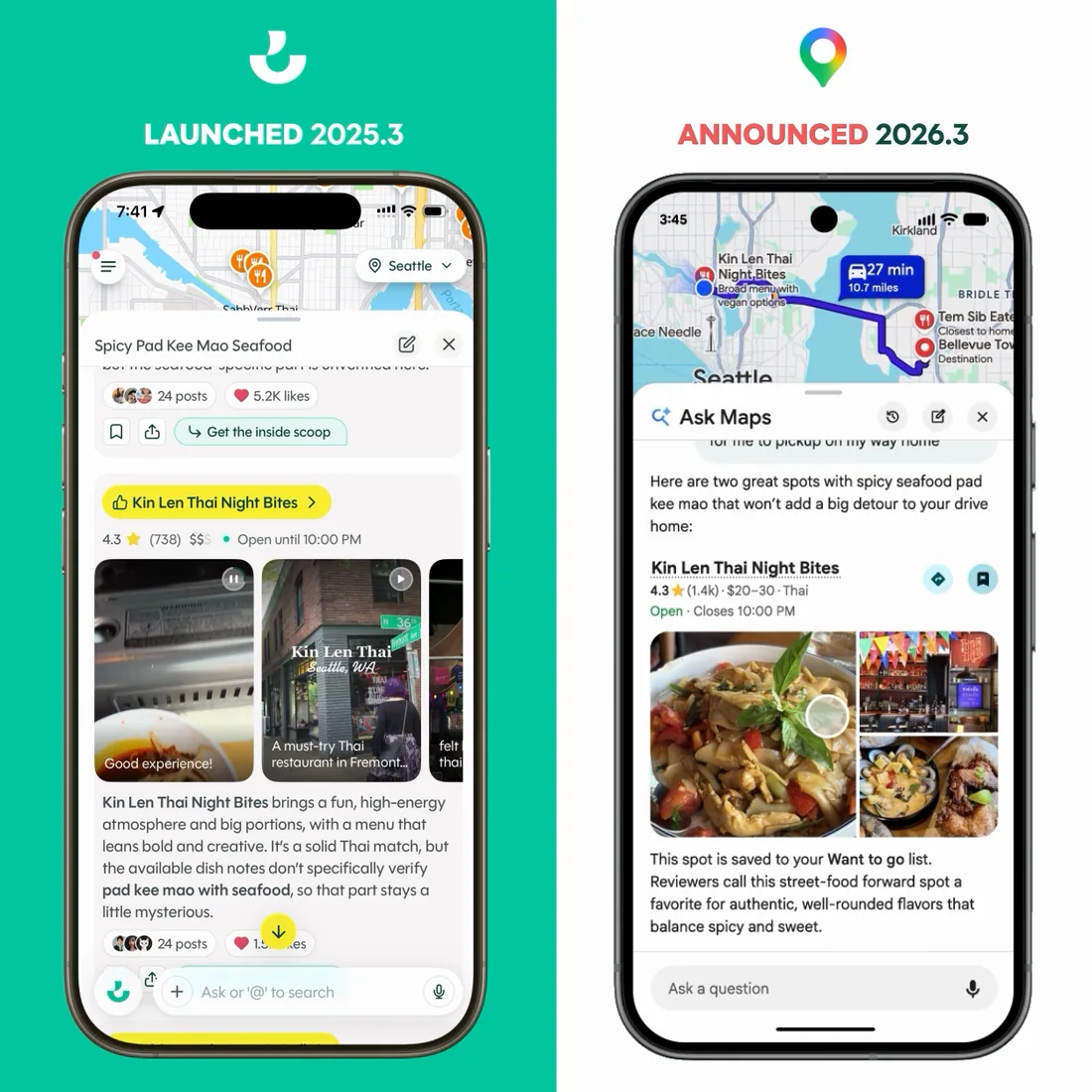
Answer the copy
Google announced Ask Maps a year after Wanderboat shipped the same idea. Say so, then show that ours is still better at it. Highest priority of the four.
Efficiency versus taste
Traditional maps optimise for logistics and hold no aesthetic opinion. Wanderboat has one, which is how it finds the small places.
Collapse the two-app habit
You no longer need Instagram or Pinterest for the inspiration and then Google Maps for the address. One conversation, one destination.
The impossible request
Stack four conditions into one sentence and let the other app fail on camera.
- 01State the request out loud before you type it, so the audience can judge the result.
- 02The same request, word for word, in both apps. No re-phrasing to help either one.
- 03The failure or the shortfall, uncut. If the competitor returns something reasonable, say so. A rigged test reads as an ad.
- 04Wanderboat's result card, held long enough to read the reasoning.
- 05Your verdict as a reviewer, in your own terms.
- 06The end card: also live on iOS and Android.
- “Google Maps just announced what this app shipped a year ago.”
- “Dog-friendly, cozy, golden-hour light, and natural wine. Watch a normal map break.”
- “I gave two apps the same impossible request.”
- “I typed the way I actually talk. Only one of them understood.”
- “This is the search no keyword filter can do.”
- Use a request you could not solve before. Specificity earns the watch time.
- Be a reviewer. Name what the other app is good at.
- Show the seconds. How fast the answer arrives is part of the claim.
- Do not fake the failure. One rigged comparison undoes thirty honest ones.
- No spec-sheet voiceover. Show the request, then the result.
- Do not skip the request phrasing. If viewers cannot see what you asked, the result means nothing.
The rest lives on the overview
Everything the three briefs have in common stays in one place, so there is only ever one version of it to keep current.